Issue Brief // Federal Overreach

Constitutional Limits Should Apply To Federal Power, Too.

This is not about excusing crime. It is about protecting Georgia families from federal overreach, warrantless intrusion, secretive enforcement, and agencies that act like constitutional limits are optional. ICE is one of the clearest current examples of a federal agency operating in ways that are too often lawless, evasive, and contemptuous of basic rights. Immigration enforcement is one major example, but the bigger principle is broader: if any federal agency can ignore rights in one neighborhood today, it can ignore yours tomorrow.

Rights do not disappear just because a federal agency says they are inconvenient.

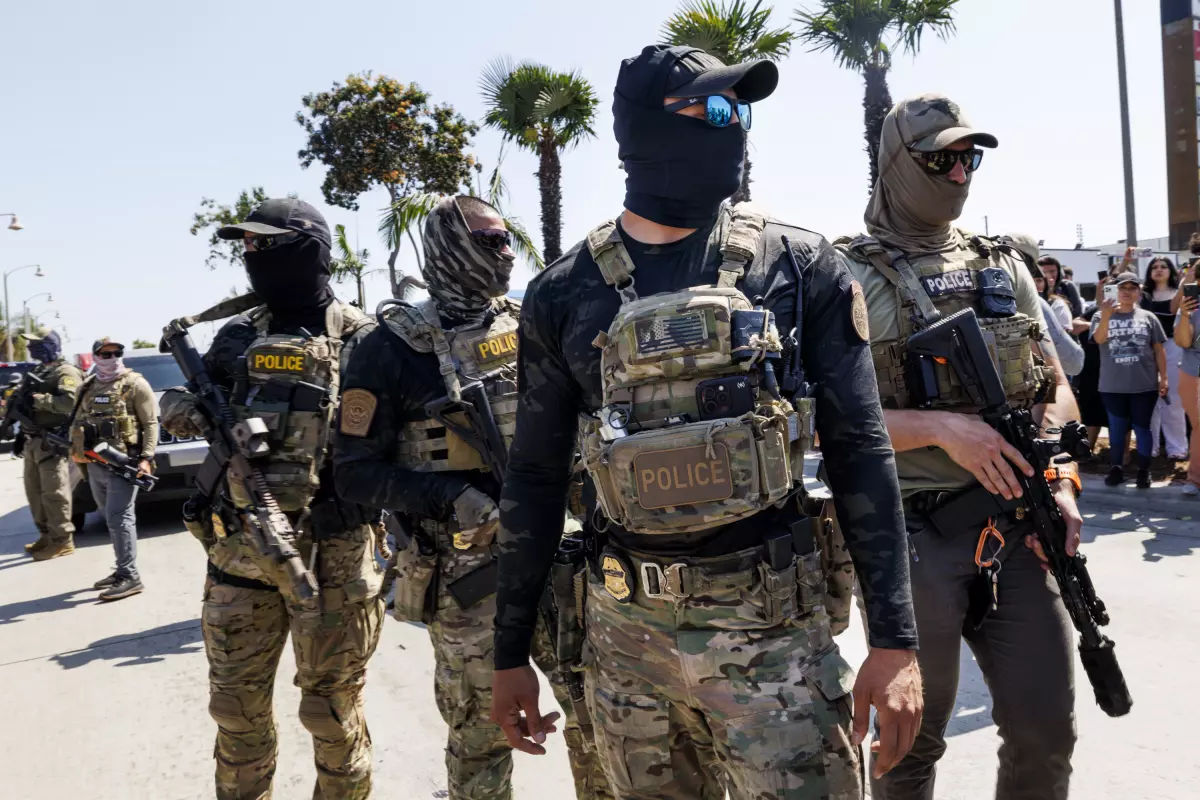
ICE-marked vehicle after a crash scene
Photo credit: Carlin Stiehl/Los Angeles Times

Your Home

No Georgia citizen should have to wonder whether armed agents can show up at a home, hide their identity, and treat a judicial warrant like a technicality.

Due Process

Agencies without transparency and accountability do not stay limited. They escalate, they overreach, and ordinary people end up paying the price.

State Duty

Georgia has a duty to defend its residents from federal agencies that violate rights, operate in secret, or expect the state to help fund and normalize abusive systems.

Summary

Georgia citizens should not lose their basic rights because a federal agency decides speed matters more than the Constitution. ICE has shown too many signs of acting like constitutional limits are optional, whether that means warrantless intrusion, secretive enforcement, or pressure on public institutions that should never be turned into enforcement zones. Homes should require judicial warrants. Schools, hospitals, churches, and shelters should not become hunting grounds. Armed agents should identify themselves. State troops should not be pulled into immigration operations without explicit approval from elected Georgia leaders.

The core principle is simple: federal power does not cancel the rights of the people who live here. When ICE or any other agency acts in masks, hides badges, pressures local systems, or seeks new detention infrastructure backed by Georgia money and roads, that is not public safety. That is lawless mission creep backed by taxpayer dollars.

A state representative cannot rewrite federal immigration law, but Georgia can refuse to be a passive partner in constitutional abuse. Georgia can insist on warrants, transparency, location limits, and political accountability. Georgia can stop subsidizing detention expansion. Georgia can refuse to turn every public institution into an extension of federal enforcement.

Leadership matters here too. Anyone who wants to call themselves a leader should be able to stand up to their own party for their ideals. We are not getting enough of that today, and it is one reason bad policy keeps moving forward without serious resistance.

Protecting rights is not anti-law-enforcement. It is pro-Constitution, pro-family, and pro-Georgia.
Homes and Warrants

A home should require a judge, not just an agency form.

If armed agents want to force entry into a home, a judicial warrant should be the baseline. Georgia citizens should not have to guess whether federal agents can bypass the spirit of the Fourth Amendment with administrative shortcuts.

  • Homes deserve the highest level of constitutional protection.
  • Administrative paperwork is not a substitute for judicial oversight.
  • If rights can be bypassed in one neighborhood, they can be bypassed in yours next.

Sensitive Locations

Schools, churches, hospitals, libraries, and shelters should not be hunting grounds.

People go to these places for education, worship, care, safety, and survival. Turning them into routine enforcement locations chills basic community life and makes vulnerable people less likely to seek help.

  • Children should not have to wonder whether school is an enforcement site.
  • Churches and shelters should remain places of refuge, not fear.
  • Hospitals should be places where people seek treatment, not places they avoid because of enforcement risk.

Transparency

Armed agents should identify themselves clearly.

When government agents show up armed, masked, or without visible identification, public trust collapses and abuse becomes easier to hide. Power should never be anonymous.

  • Badges and clear identification should be visible.
  • Masking and secrecy should be rare exceptions, not the norm.
  • People deserve to know who is exercising power over them.

Georgia's Role

Georgia does not have to help build federal overreach.

A state representative cannot rewrite federal immigration law, but Georgia can refuse to subsidize detention expansion, refuse to blur accountability, and refuse to turn state resources into a quiet extension of abusive federal systems.

  • State troops should not be pulled into these operations without explicit elected approval.
  • Georgia taxpayers should not be forced to fund detention growth.
  • State policy can draw real lines around warrants, transparency, and infrastructure support.

Leadership

A real leader must be willing to stand up to their own party.

Anyone who calls themselves a leader should be able to stand up against their party for their ideals. We are not getting enough of that today. If your principles disappear the moment party leadership leans on you, then you are not leading, you are following.

  • Constitutional rights should matter more than partisan convenience.
  • Georgia needs elected officials who will say no when their own side goes too far.
  • Leadership means defending people and principles even when it costs political points inside your party.

Bills To Watch

Georgia Bills Touching Federal Overreach

These are the bills on this site tied to ICE, warrants, transparency, state authorization, and detention expansion. The full tracker collects them with the rest of the platform's bill list in one place.

See full tracker

Agent transparency

Identification and accountability when immigration agents exercise power.

  • HB 1044

    Civil Remedies for Immigration Enforcement Rights Violations

    Gives Georgia residents the right to sue civil immigration enforcement officers who violate their constitutional rights during enforcement operations—creating a state-level accountability mechanism federal law does not provide.

    Checking Georgia Legislature status...
  • SB 389

    Require ICE Agents to Wear Visible ID Badges

    Requires all covered immigration enforcement officers to wear clearly visible identification badges during public enforcement activities—a basic transparency measure to end anonymous raids. Currently stalled in Senate Public Safety committee.

    Checking Georgia Legislature status...
  • SB 397

    Senate: Tort Remedies for Immigration Rights Violations

    Senate companion to HB 1044. Creates a state tort pathway for residents to seek damages when civil immigration officers violate their constitutional rights—both bills filed in January 2026 and pending in committee.

    Checking Georgia Legislature status...

State authorization

When Georgia forces can and cannot support federal operations.

  • HB 1053

    Repeal Mandatory Local Immigration Cooperation

    Repeals existing laws requiring Georgia local law enforcement to cooperate with federal immigration authorities—restoring local jurisdictions' ability to set their own policing priorities without federal coercion.

    Checking Georgia Legislature status...
  • SB 390

    Block National Guard from Federal Immigration Raids

    Bars the Georgia National Guard and other armed state forces from participating in federal immigration enforcement operations without explicit authorization from the Governor—asserting state sovereignty over state resources.

    Checking Georgia Legislature status...

Sensitive locations

Protections for schools, churches, hospitals, libraries, and shelters.

  • HB 470

    Prohibit Immigration Enforcement at Sensitive Locations

    Forbids immigration arrests, detentions, and searches at schools, houses of worship, healthcare facilities, and other sensitive community spaces that people depend on regardless of immigration status.

    Checking Georgia Legislature status...
  • HB 1050

    Protect Student Data from Immigration Officials

    Bars local schools and school districts from sharing student data with federal immigration authorities, protecting families from being targeted based on records their children's school holds.

    Checking Georgia Legislature status...
  • SB 391

    Warrant Required at Schools, Hospitals & Churches

    Prohibits federal immigration agents from entering schools, hospitals, churches, libraries, and domestic violence shelters without a judicially signed warrant—protecting Georgia's community anchor institutions.

    Checking Georgia Legislature status...

Detention expansion

Detention-facility growth, subsidies, and Georgia infrastructure support.

  • HB 1401

    Independent Audits of Immigration Detention in Georgia

    Requires third-party health, safety, and civil rights audits of any Georgia facility housing federal immigration detainees—providing public accountability for conditions in a system with documented abuses.

    Checking Georgia Legislature status...
  • SB 517

    Two-Year Pause on New Immigration Detention Facilities

    Imposes a two-year moratorium on new immigration detention facilities in Georgia, halting the rapid expansion of the federal detention footprint at taxpayer expense.

    Checking Georgia Legislature status...
  • SB 549

    End State Subsidies for ICE Detention Centers

    Cuts off all Georgia state funding, tax incentives, and public infrastructure support for ICE immigration detention centers—refusing to make Georgia taxpayers complicit in federal detention expansion.

    Checking Georgia Legislature status...

Example Issues In The News

ReutersHome entry without judicial warrants

Lawsuit challenges ICE ability to enter homes without warrants from US judges

A 2026 lawsuit argues ICE policy unlawfully lets agents enter homes using administrative warrants instead of warrants signed by a judge.

Read article
APSensitive locations

Religious groups challenge immigration enforcement in churches

Faith groups challenged immigration enforcement actions in houses of worship, highlighting the broader fight over whether sensitive locations should stay protected.

Read article
NPRSchools and churches

Trump immigration changes put schools and churches back in the enforcement debate

NPR outlined how policy changes reopened the question of whether schools and churches can become part of routine immigration enforcement activity.

Read article
ACLUStops, arrests, and profiling

Hussen v. Noem

The case challenges suspicionless stops, warrantless arrests, and racial profiling tied to ICE and CBP operations in Minnesota.

Read article